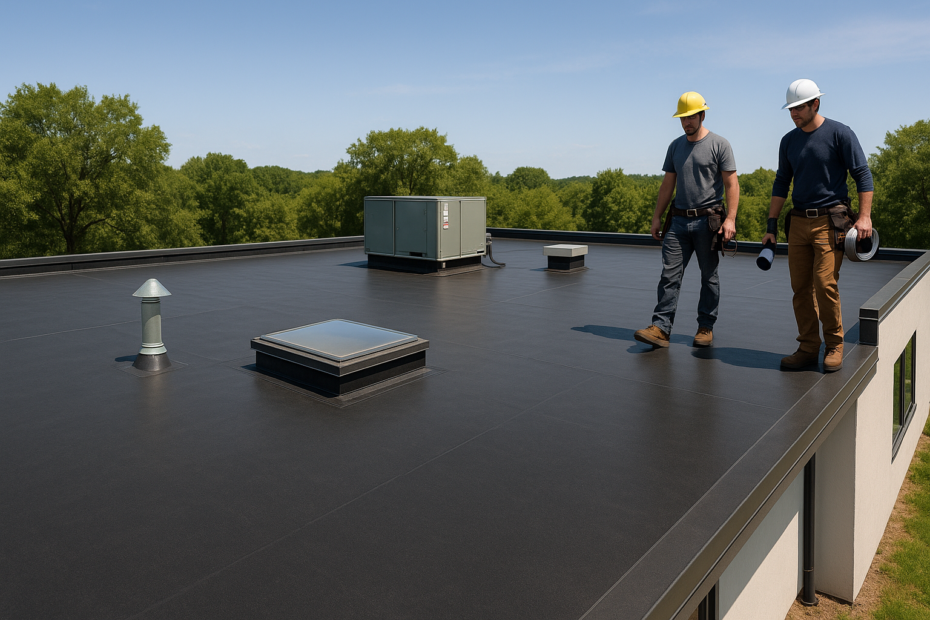
Why We Rely On EPDM Roofing For Tough Flat Roofs
Our town may be small, but the weather here in Elkhart TX is no joke. Between blazing summer sun, sudden thunderstorms, and the occasional freeze, flat and low‑slope roofs take a beating year after year. Over time, we have tested just about every flat roofing option out there, and that experience keeps bringing us back to one quiet winner: EPDM roofing.
EPDM (ethylene propylene diene monomer) is a synthetic rubber membrane that has proven itself on millions of roofs across the country. While it doesn’t always get the flashy marketing that some newer products do, we’ve seen again and again how it quietly outperforms other flat roofing choices in durability, cost, and long‑term reliability. In this article, we’ll walk through why we recommend EPDM roofing so often in Elkhart TX, and what you should know before choosing your next flat roof system.
What Makes EPDM Roofing Different From Other Flat Roof Options?
When we talk with homeowners and business owners about flat roofs, most are familiar with terms like “rubber roof,” “TPO,” or “modified bitumen,” but they’re not always clear on how they differ. Understanding what EPDM roofing actually is—and how it’s built—helps explain why it lasts so long and performs so well in places like Elkhart TX.
The science behind EPDM’s rubber toughness
EPDM is a synthetic rubber compound engineered to stand up to harsh outdoor conditions. Unlike traditional asphalt‑based roofs, which can dry out, crack, and become brittle, EPDM remains flexible and resilient for decades.
Here’s what makes EPDM stand out at the material level:
– Single‑ply membrane: EPDM roofing is a single, continuous sheet of rubber, typically 45–60 mils thick (and even thicker for some commercial applications).
– Highly flexible: It stays flexible in both extreme heat and cold, making it ideal for the temperature swings we see around Elkhart TX.
– UV and ozone resistant: The membrane is formulated to resist damage from ultraviolet light and ozone, two of the main aging factors for any roof.
– Minimal shrinkage: Properly installed EPDM has very low shrinkage over time, so seams stay tight and penetrations remain well‑protected.
Because EPDM is essentially a rubber “skin” over your flat roof deck, it moves with the building, absorbs minor impacts, and tolerates foot traffic much better than many rigid or brittle alternatives.
How EPDM compares to TPO, PVC, and modified bitumen
We often help customers compare EPDM roofing to other common flat roof systems. Each has its place, but EPDM quietly wins in several key categories:
– TPO (Thermoplastic Polyolefin):
– Pros: Bright white, reflective surface; can lower cooling costs.
– Cons: Can be more sensitive to installation quality; some formulations have had durability issues in extreme climates.
– PVC (Polyvinyl Chloride):
– Pros: Excellent chemical resistance; good for restaurants and industrial buildings.
– Cons: Can be more brittle over time; often higher material cost.
– Modified bitumen / built‑up roofing (BUR):
– Pros: Traditional, familiar systems; decent performance when installed correctly.
– Cons: Heavier; more seams; can crack with age; often needs more maintenance.
– EPDM roofing:
– Pros: Outstanding track record for 30+ years; flexible; relatively light; simple to repair; excellent UV resistance.
– Cons: Standard black EPDM absorbs more heat (though white EPDM options exist).
For many flat roofs in our area, especially on homes, small businesses, churches, shops, and detached buildings, the balance of performance, cost, and lifespan tips strongly in favor of EPDM. It solves common problems without adding unnecessary complexity, which is one of the reasons we trust it so much.
Long‑Term Durability: Why EPDM Outlasts Many Competitors
When we replace a failed flat roof, it’s usually not the age alone that causes trouble—it’s how the system handles the constant stress of standing water, UV, and temperature swings. EPDM roofing handles these real‑world stressors better than most, which is why we see it quietly performing 25–30 years or more when properly installed and maintained.
Weather resistance in a Texas climate
Our climate around Elkhart TX can punish a roof. EPDM’s weather resistance is one of its strongest advantages:
– UV and solar radiation: EPDM is designed to resist UV degradation. While some materials become chalky and brittle under years of sun, EPDM keeps its flexibility.
– Temperature extremes: From summer days over 100°F to winter nights below freezing, the membrane expands and contracts without cracking.
– Wind and storms: Because EPDM is typically installed in large sheets with strong adhesives or mechanical fasteners, there are fewer weak points for wind to lift or tear.
– Ponding water: While no flat roof should be designed to hold water, the reality is that many do. EPDM’s rubber composition holds up far better to periodic ponding than many asphalt‑based systems.
We have seen EPDM roofs in East Texas that are over 20 years old and still performing well with only minor repairs. That kind of track record is hard to ignore when we advise property owners who want a “put it on and forget it” solution.
Fewer seams, fewer leaks, easier repairs
Another reason EPDM roofing quietly outperforms others is the way it’s installed. Because the membrane comes in large rolls, we can often cover an entire residential flat roof with just one or two sheets. That dramatically reduces the number of seams—the most common source of leaks on any roof.
Key advantages here include:
– Large sheets: Fewer seams mean fewer opportunities for water intrusion.
– Strong seam technology: Modern seam tapes and adhesives form a tight, long‑lasting bond.
– Flexible around penetrations: Vent pipes, HVAC units, and skylights can be carefully flashed and sealed with compatible EPDM accessories.
– Simple repairs: If damage does occur, repairs usually involve cleaning the area and applying EPDM patches or tape—a straightforward process compared to hot asphalt or complex heat‑welded systems.
In Elkhart TX, where we see frequent wind‑driven rain, a well‑installed EPDM system with minimal seams can significantly reduce the risk of leaks and interior damage over time.
Cost, Energy, and Maintenance: The Quiet Financial Benefits
When we help homeowners and business owners compare roof options, we always encourage them to look beyond the upfront bid price. Roofs are long‑term investments. EPDM roofing often delivers the best overall value once you factor in lifespan, repairs, energy use, and maintenance.
Upfront cost versus lifetime savings
EPDM typically falls into a very comfortable middle ground on price: not the cheapest short‑term solution, but far from the most expensive. Where it really shines is over 20–30 years.
Here’s how the financial picture usually looks:
– Competitive installation cost: EPDM is generally less expensive to install than PVC and often similar to or slightly less than TPO, depending on the project.
– Long service life: A quality EPDM roof can last 25–30 years or more with basic care, which reduces how often you need to re‑roof.
– Lower repair costs: Because repairs are straightforward, you’re not paying for specialized equipment or complex procedures every time a minor issue pops up.
– Less frequent tear‑offs: In some cases, EPDM can be installed over an existing flat roof (when code and conditions allow), reducing demolition and landfill costs.
Over the lifespan of the building, those benefits can add up to thousands of dollars saved compared to cheaper systems that require more frequent replacements or intensive maintenance.
Energy efficiency and comfort in Elkhart TX
A common question we hear is: “If EPDM is black, won’t it make my building hotter?” The answer depends on the use of the building, the amount of insulation, and your priorities.
Here’s how EPDM fits into the energy equation:
– Insulation first: On most flat roofs around Elkhart TX, the biggest factor in comfort and efficiency is the insulation beneath the membrane. With proper insulation, the color of the surface becomes less critical.
– Radiant heat in winter: In some cases, black EPDM can help retain a bit more heat in cooler months, which may benefit certain buildings.
– White EPDM options: For owners focused on summer cooling costs, white EPDM membranes and coatings are available to reflect more sunlight.
– Reflective coatings: In select situations, coatings can be applied over EPDM to adjust reflectivity and extend life.
The good news is that EPDM gives us options. We can design a roof assembly that balances upfront cost, energy performance, and long‑term durability based on how your building is used.
On the maintenance side, EPDM is one of the most low‑maintenance flat roofing materials we work with:
– No regular re‑coating required under normal conditions
– Simple visual inspections after major storms
– Occasional cleaning of drains and gutters
– Quick patching of any accidental punctures
That low maintenance profile is a major advantage for property owners who don’t want a roof that constantly demands attention.
Why EPDM Roofing Fits Elkhart TX Homes and Businesses So Well
Every roofing system has environments where it excels. In our experience, EPDM roofing is an ideal fit for many of the flat and low‑slope roofs around Elkhart TX and neighboring East Texas communities. The climate, building types, and budgets here line up perfectly with what EPDM does best.
Perfect for homes, porches, and additions
We see EPDM really shine on residential projects, especially:
– Flat or low‑slope sections of homes
– Rear additions and sunrooms
– Covered patios and porches
– Carports and detached garages
– Small workshops and barns
Many older homes in our area have a mix of pitched and flat roofing. Those flat sections often become the weak link, with recurring leaks and repairs. When we replace failing roll roofing or aging modified bitumen with EPDM, homeowners usually notice an immediate difference:
– Fewer leaks around flashing and transitions
– Cleaner appearance with a single, uniform membrane
– Better tolerance to standing water after heavy rains
– Peace of mind during storm season
Because EPDM can be installed in relatively large sheets, we can often cover these smaller residential roofs with minimal seams, which boosts reliability even further.
Reliable for local businesses and light commercial buildings
EPDM is also a strong choice for many commercial buildings in and around Elkhart TX:
– Small retail shops and strip centers
– Churches and community buildings
– Office buildings with flat roofs
– Light industrial buildings and warehouses
– Restaurants with rooftop units (with proper grease management)
Local business owners usually care about four main things when it comes to roofing: cost, disruption during installation, long‑term reliability, and ease of repair. EPDM checks all of those boxes:
– Installation is efficient, keeping downtime and disruptions to a minimum.
– The membrane’s durability reduces the risk of premature failure.
– Repairs can often be done quickly, even during business off‑hours.
– The system works well with HVAC units, vents, and other rooftop equipment.
We also appreciate how forgiving EPDM is when we need to perform future work on the roof—adding a vent, moving equipment, or making structural changes is often easier with a flexible membrane that can be cut and re‑flashed cleanly.
If you’d like to explore more technical details and industry studies on EPDM performance, organizations like the EPDM Roofing Association share helpful resources at https://epdmroofs.org/.
What To Expect From An EPDM Roofing Installation in Elkhart TX
Choosing the right material is only half the story; the quality of installation is equally important. We have installed many EPDM roofing systems in Elkhart TX, and we follow a clear, step‑by‑step process to make sure each roof performs the way it should.
Our typical EPDM installation process
While every project is unique, here’s a simplified version of how we usually approach an EPDM roof:
1. Roof inspection and evaluation
– We assess the current condition of your roof deck, insulation, and any existing membranes.
– We look for signs of water damage, poor drainage, and structural issues.
2. Tear‑off or overlay decision
– If the existing roof is badly damaged or there are multiple old layers, we typically remove it down to the deck.
– In some cases, when code allows and the existing roof is sound, we can install EPDM over it to save time and cost.
3. Substrate preparation
– We repair or replace damaged decking.
– We ensure the surface is clean, dry, smooth, and ready to accept the new membrane.
4. Insulation and underlayment
– We install or upgrade insulation as needed for energy performance.
– We may add a cover board or underlayment depending on the design.
5. Membrane installation
– We roll out the EPDM membrane, allowing it to relax to minimize tension.
– Depending on the project, we fully adhere, mechanically fasten, or ballast the membrane.
– We carefully align and secure seams using manufacturer‑approved tapes and adhesives.
6. Flashing and details
– We flash all penetrations, edges, and transitions with appropriate EPDM accessories.
– We pay close attention to drains, scuppers, parapet walls, and edge metal.
7. Final inspection and walkthrough
– We inspect seams, flashing, and water flow across the roof.
– We walk you through the finished system and explain basic maintenance tips.
Our goal is always the same: install a flat roof that quietly protects your home or business for decades with minimal fuss.
Planning, maintenance, and what you can do as an owner
One of the reasons we like EPDM roofing is that it doesn’t demand constant attention. Still, a little proactive care in Elkhart TX goes a long way toward maximizing its life:
– Schedule periodic inspections: A professional inspection every year or two, plus after major storms, can catch small issues early.
– Keep the roof clear: Remove debris, sticks, and leaves that could clog drains or cause punctures.
– Protect high‑traffic areas: If you or contractors frequently access the roof, walkway pads can reduce wear.
– Report issues quickly: If you notice interior leaks, stains, or suspicious spots on the membrane, call us sooner rather than later.
As an owner, you don’t need to be a roofing expert. Just keeping an eye on things and letting us handle the rest is enough to get the full benefit from your EPDM roof.
We’ve built our reputation in Elkhart TX by installing roofs we’re proud to stand behind, and EPDM has earned our trust over and over again.
Ready To See If EPDM Roofing Is Right For Your Property?
For many flat and low‑slope roofs in Elkhart TX, EPDM roofing really does quietly beat other options. It’s not the flashiest or newest system on the market, but its long track record, durability in harsh weather, low maintenance needs, and overall value make it a smart, dependable choice for both homes and businesses.
We’ve seen EPDM roofs shrug off years of sun, storms, and temperature swings while other systems started to crack, peel, or leak. We’ve also seen the relief on our customers’ faces when they realize they can finally stop worrying every time the forecast calls for heavy rain. If your current flat roof is giving you trouble—or if you’re planning a new build or addition—this is the perfect time to consider how EPDM could protect your investment for decades to come.
If you’d like a straightforward, no‑pressure evaluation of your roof and honest guidance on whether EPDM is the best fit, we’re here to help. You can reach us and request a consultation directly through our website at https://reliableroofingeasttexas.com/. We’ll walk your roof, listen to your goals, and recommend the solution that makes the most sense for your property and your budget.