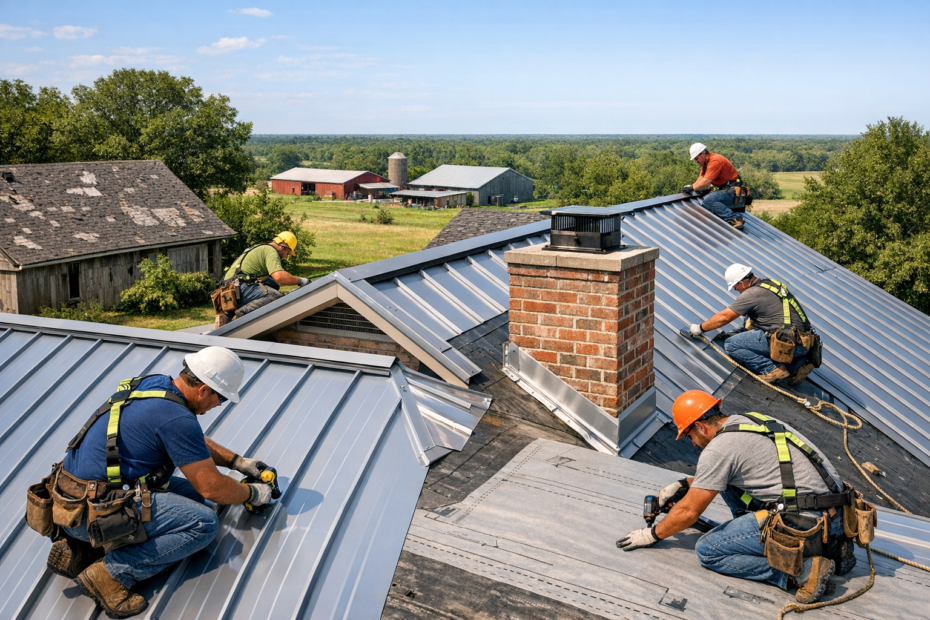
Why Metal Roofing Installation Is Different In Elkhart, TX
Living and working around Elkhart, TX, we see firsthand how unforgiving the East Texas climate can be on roofs. High winds, hailstorms, heavy downpours, and intense summer heat all team up to shorten the life of a poorly installed roof. That is exactly why the metal roofing installation choices you make today will determine whether your roof lasts 10 years…or multiple decades. Our team has seen both success stories and horror stories, and they almost always come down to the details of the metal roof installation process.
We have installed metal roofing systems on East Texas homes, barns, shops, and commercial properties for years, and we know what works here. Residential metal roofing and commercial metal roofing each have their own demands, but the common thread is this: the system is only as strong as the installation. Even premium standing seam metal roofing will fail early if the underlayment, fasteners, and flashing aren’t handled correctly. When a roofing contractor cuts corners, that “lifetime roof” quickly turns into a series of costly roof repairs and early roof replacements.
Our town sits in the crosshairs of severe weather and temperature swings. That means we have to think about storm damage, energy loss, and long-term performance before we ever tear off the first panel of an old roof. When we plan a metal roofing installation in Elkhart, TX, we design it specifically for local building codes, wind uplift ratings, and hail or storm damage risks. We also focus on energy efficiency, because in East Texas, an efficient roof can make a big difference in cooling costs.
In this article, we want to share the same metal roofing installation secrets that we use every day on projects across Elkhart, Grapeland, Texas, Crockett, Texas, Palestine, Texas, and greater Anderson County, Texas and Houston County, Texas. If you understand what professional metal roof installers look for, you can ask better questions, spot red flags, and make sure your new roof truly lasts for decades instead of just years.
Pro-Level Planning: Inspections, Codes, And Choosing The Right System
Before we lift a single shingle or panel, we start with a detailed roof inspection. On every metal roofing installation, this first step is non‑negotiable. We climb the roof, check the decking, look for soft spots, previous storm damage, and any signs of leaks or rot. If we’re dealing with hail or storm damage, we document everything carefully so our customers can use that information for insurance claims for storm damage. That roof inspection estimate often becomes the backbone of the claim and can make the difference between a denied and approved repair or replacement.
During this planning phase, we also match the right metal roofing systems to your structure and needs. For East Texas homes, we often recommend standing seam metal roofing because it offers exceptional longevity and resilience. The clips and concealed fasteners used in standing seam metal roofing installation help the panels flex with temperature changes while maintaining a watertight seal. For commercial metal roofing, we may specify heavier‑gauge metal, different profiles, or even combine metal with roof coatings on low‑slope areas to maximize performance.
We don’t stop at the roof surface; we also consider codes and safety. Local building codes for metal roofs in East Texas specify requirements for underlayment, wind uplift, and fire ratings. We carefully design each metal roof installation process to meet or exceed these code compliance standards, because that directly affects safety, resale value, and even insurance approvals. We follow OSHA safety standards on every project to protect our crews and your property, making sure harnesses, anchors, and ladders are properly set before work begins.
Choosing the right system also means comparing options. We regularly help homeowners weigh residential metal roofing against asphalt shingles. While asphalt shingles have a lower upfront cost, they often require roof replacements sooner, especially after repeated high winds or hailstorms. By contrast, metal roofing systems may cost more at first, but they typically deliver better energy efficiency, superior storm damage resistance, and fewer roof repairs over the life of the roof. On flat or low‑slope commercial roofs, we may discuss alternatives like TPO roofing, PVC roofing, or modified bitumen, and sometimes pair those with metal edges and trim for durability along the perimeter.
When you work with an experienced roofing contractor, that planning phase becomes your secret weapon. We look at:
– Roof pitch and structure
– The history of wind damage and hailstorms on your property
– Whether you need residential roofing services or full commercial roofing services
– Your energy efficiency goals and long‑term budget
– Local code compliance and insurance requirements
By investing time up front, we set your metal roofing installation up for decades of performance instead of a few seasons of frustration.
The Step‑By‑Step Metal Roof Installation Process Pros Follow
Once planning is complete, we move into the actual roofing installation process. This is where the secrets of long‑lasting metal roofing installation really matter. When you understand the key steps, you can tell whether your roofing contractor is doing it the right way or taking shortcuts.
Preparing The Deck: Tear‑Off, Repairs, And Underlayment
We almost always recommend a full tear‑off instead of “roofing over” an old system. Leaving old asphalt shingles or damaged materials beneath a new roof can hide moisture issues and shorten the life of the new system. After tear‑off, we inspect the decking again for rot or structural damage. Any compromised areas are replaced so the metal roofing panels and clips have a solid base.
Next comes one of the biggest pro secrets: the right roofing underlayment. For metal roofing systems in the East Texas climate, we typically install a high‑temperature synthetic underlayment across the entire deck. In leak‑prone sections, valleys, around chimneys, and along eaves, we may add ice‑and‑water shield for extra protection. This step is crucial for preventing leaks during heavy downpours and for minimizing energy loss through the roof. A high‑quality underlayment acts as both a secondary water barrier and a thermal layer that boosts energy efficiency.
We also address roof ventilation at this stage. Proper roof ventilation with soffit vents and ridge vents allows hot air to escape from the attic, reducing attic temperatures and improving energy efficiency for Texas homes. When we integrate roof ventilation correctly with metal roofing installation, we reduce the risk of condensation, mold, and premature deterioration of the roof deck and insulation.
Panels, Fasteners, Flashing, And Final Details
With the deck and underlayment ready, we start installing the metal roofing panels and clips. On standing seam metal roofing installation, we secure each panel with concealed clips and fasteners that allow for thermal expansion and contraction. The spacing and type of fasteners are critical to resisting high winds and wind damage. When fasteners are over‑driven, under‑driven, or placed incorrectly, panels can loosen or leak during storms. We follow manufacturer specifications and local safety standards to ensure every fastener is installed for maximum durability and wind resistance.
At roof edges, valleys, walls, and penetrations, we install custom‑bent flashing. These metal pieces are the unsung heroes of every metal roof installation process because they divert water away from vulnerable joints. Poorly installed flashing is one of the top causes of leaks and emergency roof repair calls we see after big storms in East Texas. Our crews take extra time to seal and secure these areas using compatible sealants and proper overlaps to withstand high winds and hail or storm damage.
For commercial metal roofing, we may tie into other systems such as TPO roofing, PVC roofing, or modified bitumen where the roof transitions from steep‑slope to low‑slope. In those cases, we pay close attention to how metal termination bars, roof coatings, and membranes tie together. On warehouses and industrial buildings, we often apply commercial metal roof coatings—such as elastomeric or reflective coatings—on broad flat areas to improve energy efficiency and extend the life of the metal. These roof coatings can significantly cut cooling costs by reflecting more sunlight, a big advantage in the East Texas climate.
Once all panels, flashings, and trim pieces are installed, we complete a meticulous cleanup and final roof inspection. We walk every plane, check panel alignment, verify fastener patterns, and look for any missed sealant points. This final check is critical because small issues left uncorrected can lead to leaks or storm damage years later.
By following a disciplined roofing installation process on every project, whether it’s residential metal roofing in Elkhart, TX or commercial roofing services in Grapeland, Texas or Houston County, Texas, we build roofs that stand up to decades of weather rather than just one or two storm seasons.
Designing Metal Roofing To Defeat East Texas Weather
Our weather in East Texas is tough on roofs. We’ve watched hailstorms, high winds, and intense sun beat up older systems again and again. When we design a metal roofing installation, we engineer it specifically to handle storm damage and temperature extremes so that your roof doesn’t just survive—it performs for decades.
Hail, Wind, And Water: Building For Longevity And Resilience
One of the biggest advantages of metal roofing systems is their inherent longevity and resilience. Steel or aluminum panels resist impact better than many traditional materials, especially lower‑grade asphalt shingles. When hail or storm damage hits Elkhart, TX or nearby communities like Crockett, Texas or Palestine, Texas, properly installed metal roofs often come through with only cosmetic dings instead of leaks or structural failures.
To maximize wind resistance, we:
– Use correct panel profiles and gauges rated for local wind speeds
– Install metal roofing panels and clips according to strict uplift standards
– Reinforce eave and ridge details, where high winds try to “peel” panels away
– Pay extra attention to fastening patterns in historically windy areas
We’ve seen poorly installed metal roofing literally peel off during wind damage events because fasteners were mis‑spaced or flashing wasn’t anchored correctly. In contrast, professional metal roof installers use manufacturer‑approved fasteners, follow tested patterns, and verify everything during the final roof inspection.
Heavy downpours are another East Texas reality. Steep‑slope metal roofing sheds water quickly, but only if valleys, gutters, and downspouts are sized and built correctly. We design valley flashing and outlet capacity to move water off the roof and away from the home, preventing backup and leaks. For commercial metal roofing with sections of low slope, we may recommend tying the metal into TPO roofing, PVC roofing, or modified bitumen systems, then enhancing those with roof coatings to ensure water doesn’t pond.
Comfort, Energy Efficiency, And Ventilation For Texas Homes
Performance isn’t just about weather resistance; it’s also about comfort and energy efficiency. In the East Texas climate, attics can become incredibly hot, driving up cooling costs and stressing HVAC systems. With thoughtful metal roofing installation and roof ventilation design, we can significantly reduce energy loss and improve interior comfort.
Here’s how we address energy efficiency on East Texas homes:
– Use reflective metal finishes or lighter colors to reflect more solar radiation
– Install high‑temperature roofing underlayment that adds a thermal barrier
– Design balanced roof ventilation with intake (soffit vents) and exhaust (ridge vents)
– Seal air gaps around penetrations to minimize conditioned air escaping
These strategies pay off in lower utility bills and a home that feels more comfortable year‑round. On commercial buildings, we can further improve energy efficiency with reflective commercial metal roof coatings applied over existing metal panels, especially on large, sun‑exposed roofs.
We also think about long‑term value. While the metal roofing cost can be higher than basic asphalt shingles upfront, the savings add up through:
– Fewer roof repairs and roof replacements
– Better resistance to hailstorms and wind damage
– Improved energy efficiency that cuts cooling costs
– Higher resale value and better curb appeal
Many of our customers in Anderson County, Texas and Houston County, Texas are pleasantly surprised when they realize that over 30–50 years, the total cost of ownership for a quality metal roofing installation is often lower than repeatedly replacing cheaper roofs.
When storms hit, our team is ready for storm damage restoration and emergency roof repair as well. We can quickly assess the roof, provide documentation for insurance claims for storm damage, and recommend the most cost‑effective path—whether that’s targeted roof repairs, roof coatings to rejuvenate worn areas, or full roof replacements when the damage is extensive.
Getting The Most Value: Warranties, Maintenance, And Choosing The Right Roofer
A metal roof is a long‑term investment, and the way you protect that investment is just as important as the original installation. We always talk with our customers in Elkhart, TX and across East Texas about warranties, maintenance, and how to pick the right roofing contractor to maximize their return.
Warranties, Maintenance, And Storm Support
The strongest metal roofing systems come with two types of protection: manufacturer material warranties and installer workmanship warranties. Material warranties can range from 25 years to 50+ years against defects such as premature rusting, paint failure, or panel degradation. Our workmanship warranties cover the metal roofing installation itself—how we installed the panels, flashing, underlayment, and other components.
We always explain warranty details clearly, including:
– What’s covered and what isn’t
– How long coverage lasts
– Maintenance requirements to keep the warranty valid
Routine maintenance on residential metal roofing and commercial metal roofing doesn’t have to be complicated, but it’s important. We recommend:
– A periodic roof inspection every 1–2 years, especially after major hailstorms
– Clearing leaves and debris from valleys and gutters
– Checking for loose fasteners or minor sealant cracks
– Touch‑up painting or spot repairs where needed
With preventive maintenance and occasional roof repairs, we regularly see metal roofs last multiple decades without needing roof replacements.
When severe weather hits and you suspect storm damage, we can provide storm damage restoration support. Our team documents hail or storm damage with photos and detailed notes, then helps you navigate insurance claims for storm damage. We know what adjusters look for, and we can provide the roof inspection estimate and repair scope they need to process the claim correctly.
Choosing Professional Metal Roof Installers In Elkhart and East Texas
The final “secret” to a long‑lasting metal roofing installation is choosing the right roofing contractor. Metal is not something you want installed by a crew that normally only does asphalt shingles. We’ve been called more than once to fix problems caused by inexperienced installers who misunderstood the metal roof installation process.
When you’re interviewing roofing contractors for residential roofing services or commercial roofing services, we suggest asking:
– How many standing seam metal roofing systems have you installed?
– Are you familiar with local building codes for metal roofs in East Texas?
– What safety standards do you follow on site?
– Which manufacturers do you work with, and what warranties are available?
– Can you explain your full roofing installation process from roof inspection to cleanup?
Professional metal roof installers should be able to explain how they handle roofing underlayment, metal roofing panels and clips, flashing details, roof ventilation, and code compliance without hesitation. They should be comfortable working in Elkhart, TX, Grapeland, Texas, and the surrounding East Texas region, and they should know how the East Texas climate affects roof design.
We have built our reputation on doing metal roofing installation the right way from day one. Whether we are installing residential metal roofing on a farmhouse outside Elkhart, or handling commercial roofing services on an industrial building in Houston County, Texas, we bring the same focus on quality, safety, and long‑term performance. Our passion is building roofs that are still protecting families and businesses long after the storm that tested them has passed.
If you’d like to learn more about our roofing services, you can also review up‑to‑date information from the Metal Roofing Alliance at https://www.metalroofing.com for general metal roof education, then talk with us about how those best practices apply specifically to your East Texas property.
We know that choosing a new roof is a major decision for any homeowner or business. By understanding the planning, the step‑by‑step metal roof installation process, and the importance of weather‑ready design and proper maintenance, you can make a choice that pays off for decades. If you are ready to explore metal roofing installation for your property in Elkhart, TX or anywhere in East Texas, we invite you to contact us today at https://reliableroofingeasttexas.com/ so we can schedule a free roof inspection and help you design a roof that truly stands the test of time.